
Marine Fuel in Spain, Q3 2026: What Changes for Fleets and Yachts in Transit
Marine fuel in Spain is temporarily cheaper from 1 July 2026 — but the saving isn’t the same every month, nor for everyone. Spain’s new Royal Decree-Law 18/2026 extends, on a decreasing scale, the energy measures of the previous crisis-response plan. For captains, fleet managers and operators planning calls and bunkering in Spanish waters between July and September, the useful read isn’t “Spain has cut fuel taxes”; it’s when the cut applies, how much it shrinks each month, and — a point often misunderstood — who it does not cover.
The framework in brief
Following the mid-June de-escalation between Iran and the United States, the Spanish government has chosen not to withdraw energy support all at once, but to phase it out progressively until the end of September 2026. The aim is to accompany the normalisation of markets without abrupt shocks to final prices. For the nautical sector, this translates into three concrete points.
1. Marine fuel is temporarily cheaper, but the advantage shrinks
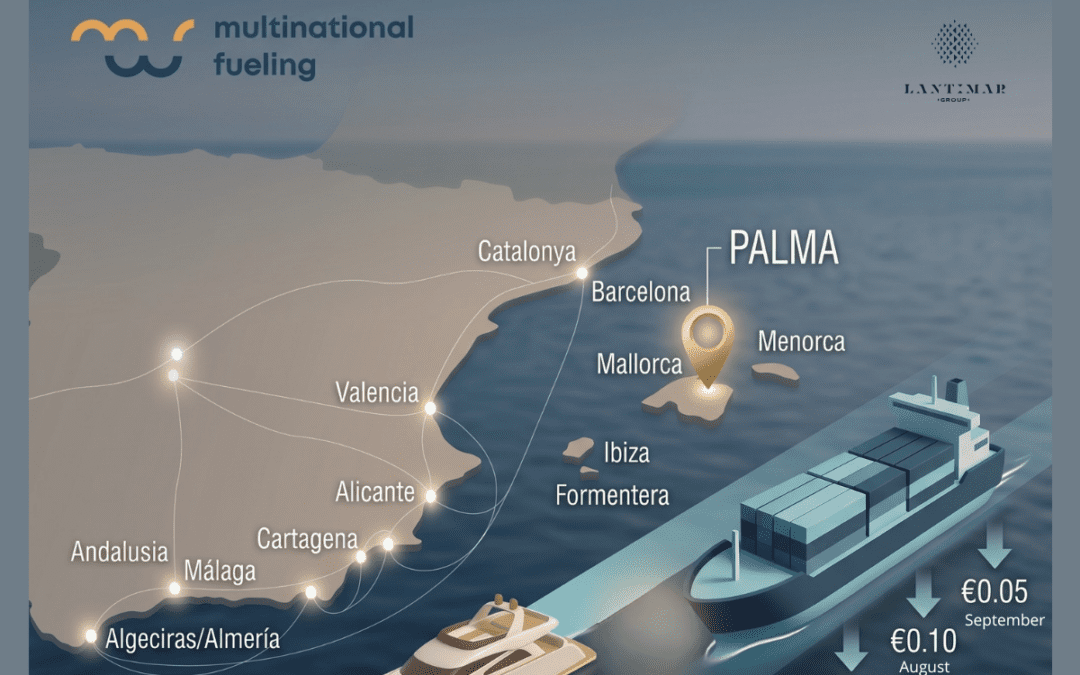
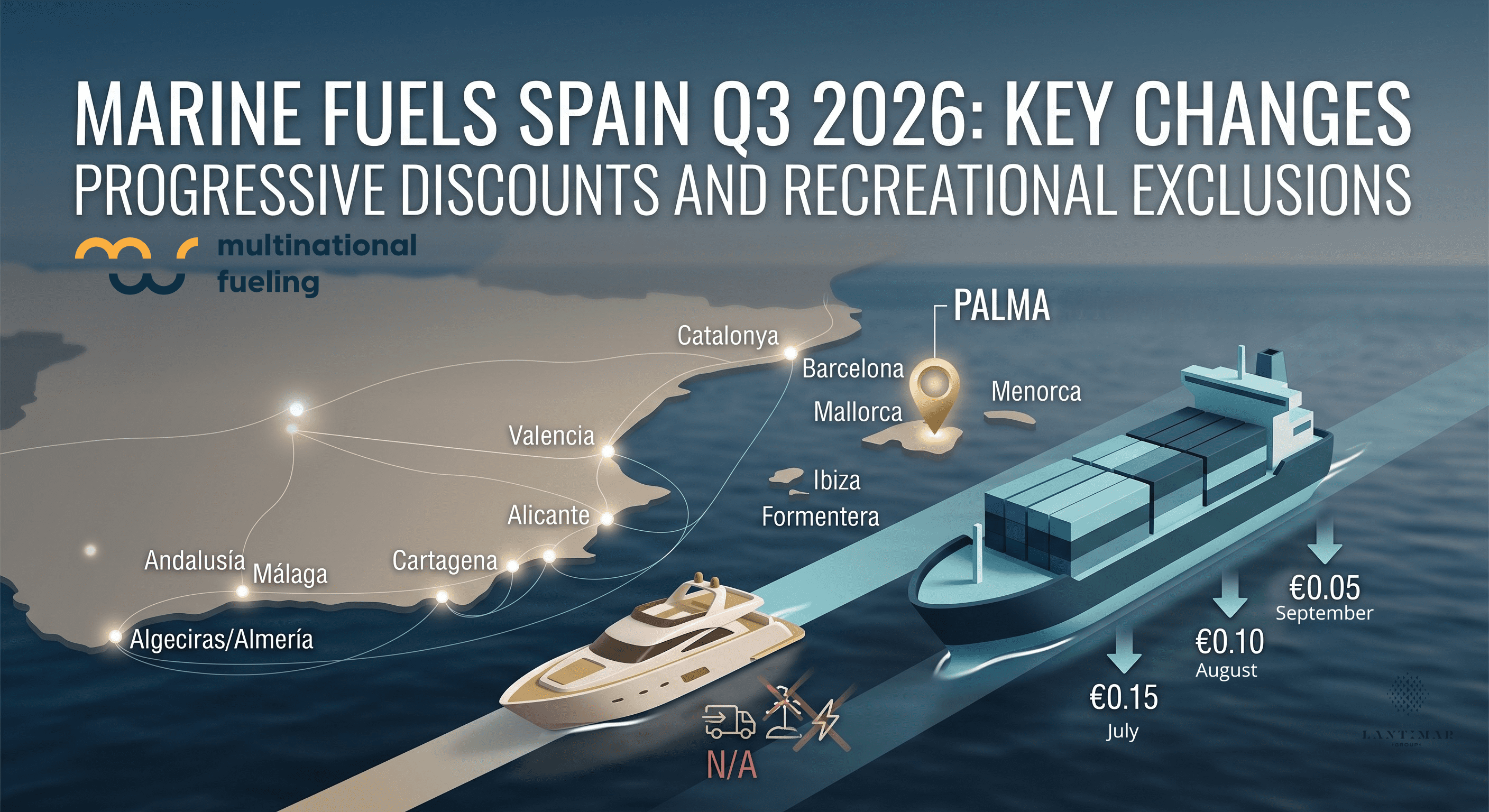
The reduction in the hydrocarbons tax also applies to products relevant to bunkering. For diesel and petrol, the cut follows a decreasing scale: around 15 cents per litre in July, 10 in August and 5 in September. From October, barring new decisions, the tax rates in force before the plan are restored. The operational consequence is simple: all else being equal, refuelling in July enjoys a greater fiscal benefit than the same operation in August or September. For those with flexibility in scheduling their calls, moving earlier can make economic sense.
2. VAT returns to 21% from 1 July
Alongside the fuel measures, it’s worth noting that the temporary VAT reduction to 10% — introduced under the previous plan — expired on 30 June 2026. From 1 July 2026, VAT returns to 21%. This is the natural end of a temporary relief, not a new increase: it’s precisely why the Spanish government had introduced these discounts in the first place, as an exceptional response to the crisis. The reduced rate can only be reactivated in August or September if energy prices spike again under the safeguard clause described below.
3. The safeguard clause: the cut can “reactivate”
The decree builds in an automatic protection mechanism. If the consumer price index of an energy product rises more than 15 per cent year-on-year, the tax reductions would become more intense again in the following months. In other words, the decreasing scale isn’t guaranteed downward: a fresh deterioration in the geopolitical context or in markets can bring wider cuts back into force. For anyone planning costs over a horizon of weeks, this means the scenario must be monitored and not taken as settled until the end of the period.
4. The point that makes the difference: private pleasure craft are excluded from the dedicated aid
This is where the most common misunderstanding lies. Several measures in this package look “nautical” but do not concern private yachting:
Direct aid to maritime transport (calculated by miles sailed and gross tonnage) applies exclusively to scheduled cabotage routes declared to be of public interest — connections between the mainland and non-peninsular territories, and inter-island lines in the Balearics and Canaries. Charters and private vessels are not included.
The relief on the special electricity tax for vessels berthed in port is expressly reserved for units that do not have the status of private pleasure craft.
The general fuel tax cut, by contrast, acts upstream, on the price, and therefore in practice benefits anyone refuelling in Spain in the months indicated, recreational craft included. The distinction between “direct aid targeted at a sector” and “general tax reduction on the product” is the key to not communicating to clients advantages that don’t exist.
What to monitor in the coming weeks
The possible activation of the safeguard clause, tied to the CPI figures published by the National Statistics Institute in the following months. The evolution of bunker prices, still conditioned by the slow reopening of the Strait of Hormuz and by war-risk insurance premiums still above normal. Transparency at the pump: the decree strengthens CNMC oversight of distribution margins to ensure the tax cut reaches the final consumer.
In summary
For a fleet or a yacht in transit through Spanish waters, Q3 2026 offers a window of temporarily lower fuel costs, with an advantage that shrinks month on month and could widen again if the context worsens. The tailored subsidies, however, remain the preserve of public-interest transport, not recreation. Planning calls with this framework in mind — and verifying market data at the moment of refuelling — is the most concrete way to benefit from it.
This content is informational and does not constitute tax or legal advice. The conditions applicable to each operation should be verified against the legislation in force and with a qualified adviser.
For more information and to receive the best bunker quotes, contact bunker@multinationalfueling.com and info@lantimaryachting.com.
As always, we’re tracking every change that affects your operating costs in the Mediterranean.